

Tuesday, 17 September 2013


Tuesday, 18 June 2013
Changes in power as world grows up - Sydney Morning Herald. June 19, 2013
Changes in power as world grows up
 Illustration: Kerrie Leishman
You might have heard about peak oil, but what about peak child? When I was born in 1965, about one in three of the world's people were children. That will fall to one in five in my lifetime - assuming I make it to the ripe old age of 85.
It might not sound dramatic but the repercussions of that shift are Earth-changing. The number of babies being born around the world is unlikely to ever be higher than now, and that means the domination of the world's population by those in lower age brackets is ending.
These predictions are far more than guesswork. Forecasting future population is one thing at which we've become very good.
Over the past 50 years, the population aged under 15 ballooned from 1 billion to nearly 2 billion. But revised 100-year population forecasts, released by the United Nations last week, show the number of children will flatten out over the next 15 to 20 years and then fall back to 1.9 billion by 2050.
Swedish public health statistician Hans Rosling, who has popularised the term ''peak child'', said the world was entering an unusual phase when only the adult population would be growing.
Advertisement
Today, the average person is 29 years old but that will rise to 41 years by 2100.
The main reason for this shift is nearly half the global population lives in ''low-fertility'' countries where the average woman has less than 2.1 children (the level required for full replacement of the population).
Most developed countries like Australia have been in that category for some time but we've been joined by some developing country giants, including China and Brazil. Less than one in 10 people live in one of the very poor ''high-fertility'' countries, where the average woman has five or more children, almost all of them in Africa.
Another factor is the rapid worldwide improvement in longevity. In 1950, global life expectancy at birth was 47 years. By the end of this century, the UN predicts it will be 82 years.
Even in the world's least developed countries, which include many nations badly affected by HIV/AIDS, life expectancy will only be about four years less than that.
In developed countries, life expectancy will continue to improve, but at a much slower rate, reaching almost 90 years by 2100.
As fertility declines and life expectancy rises, the proportion of older people across the world will surge dramatically.
The number of over 60s will balloon to nearly 3 billion by the end of the century, the vast majority in developing countries. But many of those nations will have to deal with an ageing population without the same economic growth and living standards that preceded greying populations in Western countries.
For decades combating child poverty, especially in low-income countries, has been a prime humanitarian goal.
But that enduring challenge will be joined by a new global health crisis - the need to care for a massive population of elderly people with limited resources.
These predictions are far more than guesswork. Forecasting future population is one thing at which we've become very good. Rosling points out that in 1958, the UN's population division predicted the world's population would be 6.3 billion by 2000. In that year, the actual population was 6.12 billion meaning the UN's forecast was only out by about 3 per cent over four decades. The latest forecasts predict the global population to grow from 7.2 billion now to 10.8 billion in 2100.
The demographic shifts foretold by the UN will shape the economic and political dynamics of the Asian century. India is forecast to overtake China as the world's most populous country by 2028. Soon after that, China's rapidly ageing population will start to shrink.
By the end of the Asian Century, China's population will be a sixth smaller than it is now. That will leave India as the world's most populous country by a considerable margin in 2100, with a population of 1.5 billion. This may have implications for the strategic balance between Asia's twin giants.
Meanwhile, Europe's population will have shrunk by a seventh by 2100 and Japan's by a third (the average age in both Germany and Japan will be over 50). Australia's population is forecast to keep slowly rising, reaching 41.5 million by the end of the century.
The most eye-catching changes will be in Africa. The population of Nigeria will surpass the US by 2050 and could rival China as the world's second most populous country by the end of the century.
Another four African countries - Tanzania, Uganda, Ethiopia and the Democratic Republic of the Congo - will all have 200 million people, putting them among the world's most populous nations.
With their big, youthful populations, countries like these will become a much bigger source of migrants in Australia as our population ages.
By the end of the 21st century, about 35 per cent of the world's people will be African. That virtually guarantees the African region a far more significant role in the global economy than it currently plays. Great diplomatic and strategic clout will inevitably follow.
If population trends are any guide, Africa will eventually muscle in on the Asian century.
Matt Wade is economics writer for the Sydney Morning Herald.

Monday, 10 June 2013

Tuesday, 4 June 2013

Thursday, 30 May 2013

Tuesday, 21 May 2013
Sunday, 19 May 2013


Thursday, 16 May 2013
Don't slam Mike Jeffries of Abercrombie and Fitch
Unfortunately Mike isn't Robinson Crusoe here. Work for any media or publishing house. In fact have a look around most commercial enterprises and note how many people who don't fit a certain stereotype actually have jobs! When you are the boss you say who gets hired and the chances are people want attractive people to represent their brand. Not just that people want buyers all the time to be in a certain segment. I remember one editor told me she wasn't going to come along and watch the readers of her magazine talk about the issues any more as she liked to be in a bubble and think they all looked and acted like the gorgeous people, rather than the real people. Another time we actually published a 'real' look magazine. Guess what? No one bought it.
So don't slam the CEO of Abercrombie - he has a lot of company (unfortunately) with him.
Tuesday, 14 May 2013
Friday, 3 May 2013
27 Stunning Views of Architecture Photography
Photography is a very influential medium and a very challenging one to master too. Amazing photos not only show the beauty of photography,but they tell stories, awake feelings and manage to share with the audience the emotions a photographer experienced while shooting the picture.
Architectural photography can be broadly considered to include views of the exteriors and interiors of domestic, commercial, religious, institutional, and engineering structures, as well as records of the evolution of towns and cities. Today, we are showing you 27 Stunning Examples Of Architecture Photography.
Bay Bridge by Evgeny Vasenev

Benny at work by abandon

Blade with Rays by KPK

Bridge by Alexander Martirosov

Bridge the light by Alisdair Miller

Cloud Gate and the City by Ali Erturk

Colorful of Marina by Adhitiya Wibhawa

contemporary haunting by dorus

Defense color lines by Marc Pelissier

Desert Light by ali rasit

Ericsson Kista, Stockholm by Mattias Hamrén

Fly over by Marc Pelissier

Keep it clean by Lars Johnson

Leap of Faith by Jeff Lewis

Modern Bastille day by Marc Pelissier

Myth by Ali Erturk

NYC Skyline by Fiorenzo Carozzi

On the other side of the mirror by woda

sailing at night by spreephoto

Singapore, the city of lights by Sebastian Kisworo
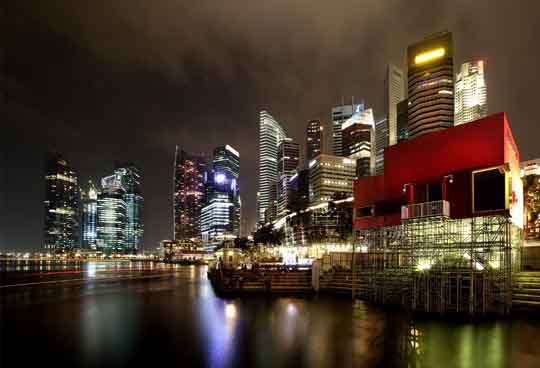
skyward by Zuhsalu

The City of the Pharaohs (CAC) by Rafael Clares

The diamond by Marc Pelissier

The Embracement by Gabriel Buse

The Forum by Darrell Godliman

The largest clock tower in the world by yazeed alshehri

The reflex by Fabio Ornago

Thursday, 2 May 2013
A Positive Post....
Not sure about you but I am thinking I need to occasionally place a good news story among the other posts. As a huge follower of news - there is often only bad news to be had so I am going hunting for great and uplifting news stories.......Here is one.
US beckons for man with a plan to cure brain cancer
Read more: http://www.smh.com.au/world/us-beckons-for-man-with-a-plan-to-cure-brain-cancer-20130502-2ivr2.html#ixzz2SAx2ZZYo
 |
| Confident: Neurosurgeon Charlie Teo. Photo: Quentin Jones |
World-renowned Australian neurosurgeon Charlie Teo has announced a 10-year global plan to find a cure for brain cancer.
He heads to Washington DC next week to address the US Congress and push for brain cancer research as part of President Barack Obama's initiative to map the human brain.
In 2010, Associate Professor Teo, the pioneer of minimally invasive keyhole surgery techniques, founded the Cure for Life Foundation, which is now the largest funder of brain cancer research in Australia.
On Thursday, he announced the intention of Cure for Life's Global Brain Exchange (GBX) to collaborate with US organisations to find a cure for brain cancer by 2023.
Professor Teo said GBX aims to sign agreements with US research bodies by the end of the year.
On May 10, he will address the US Congress as part of Brain Mapping Day.
''My job there is to impress upon them the need to fund brain cancer when they're funding brain mapping,'' he said.
''It kills more kids than any other cancer and has more financial impact on America and every other country than any other cancer.''
Professor Teo said Australian research institutions are working collaboratively on such work. He said the 10-year timeframe to cure brain cancer is realistic.
''When I was a medical student we were taught that 90 per cent of people with leukaemia would die and now we're taught exactly the opposite.''
About 1200 Australians die from brain cancer each year.
Read more: http://www.smh.com.au/world/us-beckons-for-man-with-a-plan-to-cure-brain-cancer-20130502-2ivr2.html#ixzz2SAx2ZZYo

Subscribe to:
Posts (Atom)